Popular eSIM destinations
Rated Excellent by users Worldwide


Reviews temporarily unavailable
Please check back later for customer reviews


Currency : USD











MobiMatter brings the best eSIM products from telecom operators under one roof










How it works
Check Help & FAQs to see if your device supports eSIM

Choose destination & package
MobiMatter offers eSIM packages for 190+ countries

Install eSIM
Instantly get your eSIM and configure it in your eSIM compatible device

Enjoy high speed connectivity
Once eSIM is configured, you can enjoy high speed roaming data connectivity
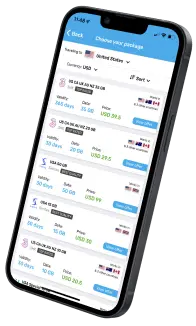
Supercharge your eSIM experience
Download our app


Recent travel tips and guides

Jun 9, 2026 — 10 min read
Lights over the Harbour: Your Complete Vivid Sydney 2026 Guide
Vivid Sydney 2026 runs 22 May to 13 June across 23 nights. The free 6.5km Light Walk covers 43 installations from Circular Quay to Darling Harbour. Best photography spots are the Opera House foreshore, Cahill Walkway, and Barangaroo waterfront. International travelers need reliable mobile data for remote shutter apps and instant uploads. A MobiMatter Australia eSIM is the most affordable way to stay connected throughout the festival without roaming fees. Introduction: Australia's Biggest Festi...
Read more

Jun 4, 2026 — 9 min read
How To Watch FIFA World Cup 2026 Live: Best US Host Cities for First-Time Fans
The top 3 US cities to watch FIFA World Cup 2026 are New York/New Jersey (MetLife Stadium), Miami (Hard Rock Stadium), and Los Angeles (SoFi Stadium). All three offer world-class fan zones, diverse international crowds, and excellent transport links. To stay connected across the USA, Canada, and Mexico without expensive roaming charges, get a Mobimatter eSIM for USA before your trip and enjoy seamless 5G data at every match. Why the 2026 World Cup is Unlike Any Before it For first-time fans t...
Read more

May 20, 2026 — 20 min read
The 9-Day Eid Escape: Top Long-Haul Destinations and Multi-City Itineraries for 2026
I. Introduction: The "9-Day Bridge" Strategy With Eid Al Adha expected to fall around Thursday, May 28, 2026, residents across the UAE, Saudi Arabia, Turkey, and the wider GCC are looking at a full 7 to 9-day window stretching from Saturday, May 23 to Sunday, May 31. By burning just one or two days of annual leave around the weekend bookends, the entire block becomes available for long-haul travel. This is what travel planners are calling the "9-Day Bridge Strategy," and the flight booking data...
Read more
Why MobiMatter eSIM Marketplace?

Instant delivery & ready to use

Best value for money

Global coverage